
People searching for the best gynecologist in Burdwan are usually not looking for a marketing label. They are trying to find a doctor they can trust with a very personal health concern. The right choice may depend on whether you need pregnancy care, help with irregular periods, PCOS evaluation, fertility guidance, menopause support, or a surgical opinion. This guide explains how to make that decision in a practical and medically responsible way.
What “Best Gynecologist” Should Mean for a Patient
“Best” is subjective in healthcare. A doctor who is a good fit for one patient may not be the right fit for another. A more useful question is: Does this doctor have the training, clinical scope, communication style and local availability that match my needs?
When comparing gynecologists in Burdwan, look beyond rankings and advertisements. Review the doctor’s qualifications, the services offered, whether pregnancy care is part of the practice, how reports are reviewed, and whether the clinic clearly explains when hospital assessment or referral is required.
A patient-focused consultation should help you understand what is known, what still needs evaluation and what the next step may be. You should also feel comfortable asking questions about investigations, medicines, procedures, follow-up and alternative options.
Common Reasons Women Consult a Gynecologist
Gynecology covers health concerns from adolescence through reproductive years, pregnancy and menopause. You do not need to wait until symptoms become severe before asking for medical advice. A consultation may be useful when a concern is persistent, recurring, changing or interfering with everyday life.
- Irregular, delayed, very heavy or unusually painful periods
- Pelvic or lower abdominal discomfort that persists or recurs
- Vaginal discharge, itching, odour or possible infection symptoms
- PCOS-related cycle changes, acne, excess hair growth or fertility concerns
- Pregnancy planning and preconception questions
- Positive pregnancy test and routine antenatal follow-up
- Pregnancy that may need closer monitoring because of medical or obstetric history
- Difficulty conceiving or questions about fertility evaluation
- Menopause-related symptoms or postmenopausal bleeding that needs assessment
- Discussion about hysteroscopy, laparoscopy or another gynaecological procedure
Pregnancy Care and Antenatal Follow-up in Burdwan
Pregnancy care is one of the most important reasons patients look for an obstetrician-gynaecologist close to home. Regular antenatal visits may include review of symptoms, blood pressure, weight changes, previous reports, laboratory results and ultrasound findings. The exact schedule depends on the pregnancy stage and individual clinical situation.
Good antenatal care is not simply a sequence of tests. It should help the patient understand what is being monitored, why an investigation may be advised and when the next review is expected. A local clinic can also be convenient when repeated follow-up or report review is needed.
Some pregnancies need closer observation because of maternal age, diabetes, high blood pressure, thyroid disease, previous pregnancy complications, multiple pregnancy, fetal concerns or other medical factors. High-risk pregnancy does not automatically mean that every patient needs hospital admission. The appropriate setting depends on the specific risk, symptoms and current findings.
Patients should also know that some pregnancy symptoms require urgent assessment rather than waiting for a routine clinic visit. Heavy bleeding, severe abdominal pain, fainting, seizures, severe breathlessness, leaking fluid, severe headache with visual symptoms or markedly reduced fetal movement later in pregnancy may require prompt medical attention.
PCOS, Irregular Periods and Menstrual Problems
Irregular periods can happen for many reasons, and PCOS is only one possible cause. Changes in weight, thyroid problems, stress, pregnancy, some medicines and other hormonal or medical factors can also affect the menstrual cycle. This is why it is usually better to evaluate the pattern rather than assume the diagnosis from a single symptom.
During a gynecology consultation, the doctor may ask about cycle length, bleeding pattern, pain, acne, hair growth, weight changes, pregnancy plans and previous test results. Examination or targeted investigations may be considered when clinically relevant. Treatment should be based on the underlying cause and the patient’s priorities rather than using the same approach for everyone.
Very heavy bleeding, severe pain, dizziness, fainting or symptoms of significant blood loss should not be ignored. Timely assessment may help identify whether urgent care, laboratory testing or imaging is needed.
Fertility and Preconception Guidance
Fertility concerns can be stressful, especially when couples are unsure when to seek advice. An initial consultation may review menstrual cycles, duration of trying to conceive, previous pregnancies, medical history, medicines, past surgery and any earlier fertility tests. The aim of the first visit is often to decide what information is missing and whether further evaluation is appropriate.
Preconception guidance can also be useful before pregnancy. Depending on the individual situation, discussion may include existing medical conditions, current medicines, vaccination history, lifestyle factors, prior pregnancy complications and folic acid use. Patients with diabetes, high blood pressure, thyroid disease or previous pregnancy complications may benefit from planning before conception.
No ethical fertility consultation should promise pregnancy. Outcomes depend on many factors, and the appropriate next step may range from simple timing advice to investigations, treatment of an underlying condition or referral for specialist fertility care.
Menopause and Other Women’s Health Concerns
Menopause is a normal life stage, but symptoms can vary widely. Hot flushes, sleep disturbance, mood changes, vaginal dryness and changes in bleeding patterns may affect quality of life. A consultation can help review symptoms, health history and whether evaluation or treatment is appropriate.
Bleeding after menopause should be assessed rather than assumed to be normal. Similarly, persistent vaginal discharge, itching, odour or discomfort may have several causes and should be evaluated based on symptoms and examination rather than treated repeatedly without a clear diagnosis.
When Laparoscopy or Hysteroscopy May Enter the Discussion
Not every gynecological concern needs surgery. Laparoscopy and hysteroscopy are procedures that may be considered for specific indications after appropriate evaluation. Laparoscopy allows assessment or treatment inside the abdomen through small incisions, while hysteroscopy uses a thin telescope to examine the inside of the uterus through the cervix.
If a procedure is recommended, patients should ask why it is being considered, what alternatives may be available, what preparation is needed, and whether the procedure should be done in a hospital or another appropriate facility. The decision depends on the diagnosis, symptoms, previous treatment, medical history and the expected benefits and limitations of the procedure.
How to Choose a Gynecologist in Burdwan
A practical comparison can make the decision easier. Consider the following points before booking:
- Qualifications and clinical scope. Check whether the doctor is trained in obstetrics and gynaecology and whether the practice covers the type of care you need.
- Clear service information. The website or clinic should explain whether pregnancy care, PCOS, menstrual problems, fertility guidance, menopause care and surgical consultation are available.
- Communication style. A useful consultation should allow you to explain symptoms, review reports and understand why a test or treatment may be suggested.
- Continuity of care. Pregnancy, PCOS, fertility-related concerns and chronic menstrual problems may need more than one visit. Ask how follow-up and report review are handled.
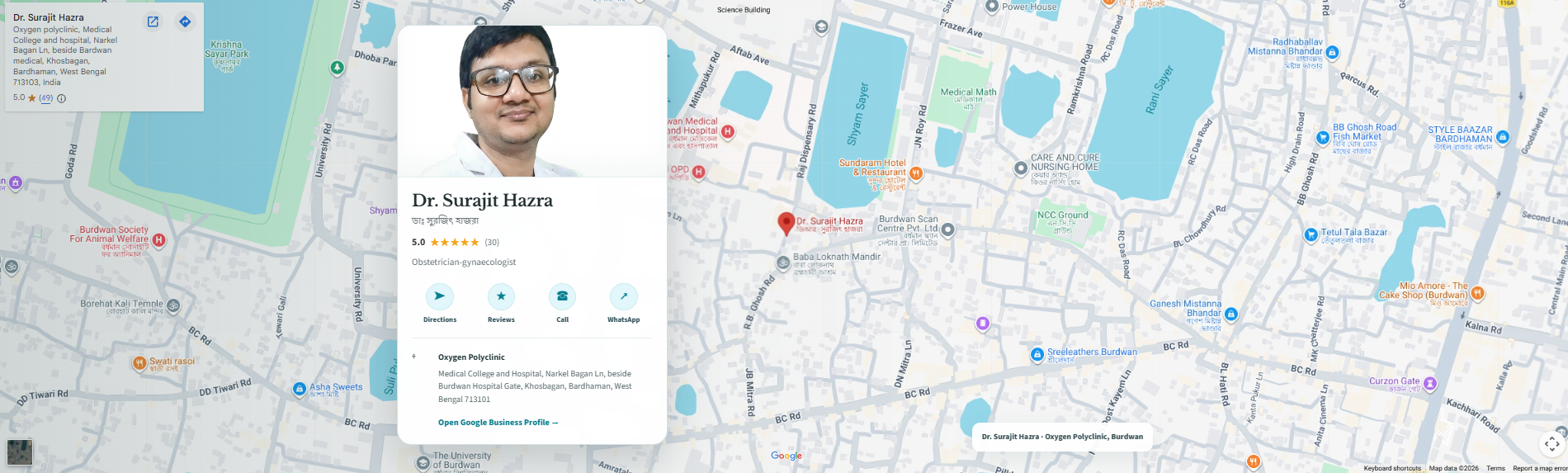
- Local clinic access. A convenient location can matter when repeated visits are required. Dr. Surajit Hazra consults at Oxygen Polyclinic in Khosbagan, beside Burdwan Hospital Gate.
- Referral boundaries. A responsible clinic should advise hospital assessment, emergency care, imaging or specialist referral when a concern is outside routine consultation.
- Informed decision-making. Before tests or procedures, patients should understand the purpose, possible alternatives and what happens next.
What to Expect at a First Gynecology Consultation
The first visit usually begins with a detailed history. The doctor may ask about the main concern, how long it has been present, menstrual cycles, pregnancy history, previous procedures, medicines, allergies and relevant family or medical history. Depending on the concern, an examination may be suggested.
Testing is not automatically required for every patient. Ultrasound, blood tests, cervical screening, infection testing or other investigations may be considered when they are relevant to the symptoms and clinical findings. If you already have recent reports, bring them so the doctor can review what has already been done.
Before leaving, try to understand the working assessment, whether any test is needed, what treatment or observation has been suggested, what warning symptoms require earlier review and when the next appointment should be scheduled.
How to Prepare for Your Appointment
A little preparation can make the visit more productive. Bring previous ultrasound, blood test or imaging reports, current prescriptions, a list of medicines and supplements, and any pregnancy, surgery or hospital records that relate to the concern. If periods are the main issue, noting recent cycle dates and bleeding patterns can be useful.
Write down your main questions before the consultation. Women sometimes forget important concerns once the appointment begins, especially if they are anxious. A short list can help ensure the issues that matter most to you are discussed.
You do not need to provide highly sensitive details through an online enquiry form. The form on this page is intended only to request an appointment. Personal medical information is better discussed directly with the clinic or during consultation.
Dr. Surajit Hazra’s Clinic in Burdwan
Dr. Surajit Hazra is an obstetrician, gynaecologist and laparoscopic surgeon providing clinic-based women’s health and pregnancy consultation in Burdwan. Services listed on the website include pregnancy care, antenatal checkups, high-risk pregnancy monitoring, preconception guidance, PCOS care, irregular periods, menstrual problems, fertility guidance, menopause care, vaginal infection concerns, laparoscopy and hysteroscopy consultation.
Consultation Location
Oxygen Polyclinic
Narkel Bagan Lane, beside Burdwan Hospital Gate
Khosbagan, Bardhaman, West Bengal 713101
Contact the clinic before travelling to confirm current consultation availability.
When Routine Consultation Is Not Enough
A clinic appointment is appropriate for many women’s health concerns, but some symptoms need urgent medical assessment. Seek appropriate emergency care for severe or rapidly worsening symptoms, heavy bleeding with weakness or fainting, severe abdominal pain, seizures, severe breathlessness, or urgent pregnancy warning signs. Do not rely on an online enquiry form for emergencies.
A Practical Way to Make Your Decision
Choosing a gynecologist in Burdwan is not about finding one universal “best” doctor. It is about matching the doctor’s training and services to your needs, having your questions taken seriously, understanding the next steps and being able to access appropriate follow-up. For pregnancy and women’s health concerns, Dr. Surajit Hazra provides clinic-based consultation at Oxygen Polyclinic in Khosbagan, beside Burdwan Hospital Gate.
Disclaimer: This article is for awareness only and does not replace a medical consultation. Diagnosis and treatment depend on individual symptoms, examination and relevant investigations.